

Your Website Might Be Losing Leads Without Any Warning Signs
Website traffic is up, rankings are holding, and the site looks fine. Still, the leads aren’t coming in the way they should.
This is one of the most frustrating positions to be in, because nothing in the data points to a clear problem. Marketing is doing its job. The site is getting found, but somewhere between a visitor arriving and becoming a lead, something is breaking down. Standard reporting isn’t built to show you where.
The issue here isn’t always online visibility. It’s what happens after someone lands on the site and starts deciding whether to trust you, understand you, and take the next step. That’s a user experience problem, and it’s quieter and more common than most people realize.
Being Found Is Only Half the Job

Time, money, and effort goes into getting people to a website. SEO, ads, and social content add up to achieve the goal of visibility, and that visibility is worth pursuing.
Visibility only gets someone to the door. What happens once they’re inside is a different experience.
If someone lands on your site and can’t quickly figure out what you do, who you help, or what to do next — they’re gone. Not because they weren’t interested, but because the experience didn’t hold up their end of the deal.
That is a user experience problem. It is one of the most common reasons a site with decent traffic produces inconsistent results.
UX Isn’t About How Your Site Looks, But About How It Decides
When someone lands on your website, they’re not reading it — they’re scanning it. They are asking themselves a few fast questions:
- Is this what I was looking for?
- Does this business seem credible?
- What am I supposed to do here?
If the answers aren’t obvious within a few seconds, people don’t stick around to figure it out. They go back and click on someone else.
This is where most conversion problems actually live. They do not live in traffic volume, not in SEO rankings, but in those first few moments where a visitor is deciding whether to stay or leave.
The Losses Are Small and Easy to Miss
No one loses a hundred leads in one shot because of a bad website. It happens gradually, in small fractions.
A headline that’s slightly unclear. A contact form that feels like too much work. A page that loads slowly on mobile. A service page that doesn’t quite answer the question someone came with.
Each one of those moments shaves a small percentage off your conversion rate. Individually, none of them look like a crisis. Together, over hundreds or thousands of visitors, they add up to a real gap between the leads you’re getting and the leads you should be getting.
Because your reports still show traffic and engagement, it’s easy to conclude that nothing’s wrong.
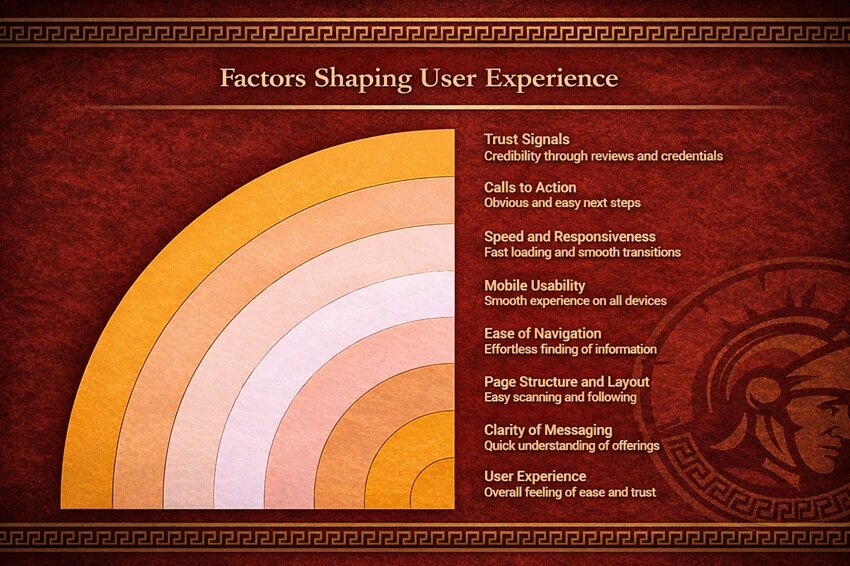
What the Data Doesn’t Show You
Standard analytics are good at measuring activity. They are not great at explaining why someone didn’t act.
When a visitor leaves without converting, it just becomes part of your overall conversion rate — a number that can look stable even while opportunity quietly slips through the cracks.
There’s no alert that fires. No report that says “this page confused 40% of your visitors.” The problem stays invisible until someone actually digs into the experience itself.
That’s why UX issues tend to go unaddressed for so long. The site looks like it’s functioning. The numbers don’t scream. But the results never quite match the potential.
The Question Worth Asking

If your traffic has been steady but your leads feel inconsistent, it’s worth asking a simple question:
What is it actually like to visit my website as a potential customer?
Not as someone who already knows what the business does. As someone arriving for the first time, deciding in a few seconds whether to stay or go. That shift in perspective usually reveals more than any report will.
From there, a plan can be made to start addressing these issues.
FAQs On User Experience and Revenue
Why is my website getting traffic but not leads?
Traffic only means people are finding your site. It doesn’t mean they understand what you offer or feel confident taking the next step. In many cases, the issue comes down to how clearly your site communicates, how easy it is to use, and whether it builds trust quickly. If any of those are off, visitors leave without converting.
How do I know if my website has a user experience problem?
User experience issues rarely show up as obvious errors. They usually appear as patterns, like steady traffic with inconsistent leads, or engagement that doesn’t turn into action. If your marketing is bringing people in but results feel underwhelming, it’s often a sign that something in the experience is causing hesitation.
Can improving user experience really increase revenue?
Yes, because it improves how effectively your existing traffic converts. Small changes like clearer messaging, faster load times, or more obvious next steps can increase the percentage of visitors who become leads. Over time, even modest improvements in conversion rate can have a noticeable impact on overall revenue.
Should I focus on getting more traffic or improving my website?
Both matter, but they should work together. If your website isn’t converting the traffic you already have, increasing visibility alone won’t solve the problem. Improving the experience first often leads to better results, because it allows your current traffic to perform more effectively before investing more into bringing in new visitors.
More Traffic Is Only Part of the Answer
The instinct when leads slow down is to generate more visibility — more content, more ads, more SEO.
Sometimes that’s the right move, but if the underlying experience isn’t converting the visitors you already have, adding more traffic just means more people leaving. Fixing the experience first is almost always more efficient. It makes every marketing dollar work harder, because the people you’re already reaching are more likely to actually do something.
Visibility creates opportunity. Experience determines the outcome.
Make sure your site is well positioned for both.
Is Your Website User Friendly?
Schedule a consultation today to find out where you might be falling short.