

Why “Good” Marketing Reports Can Be Misleading
On paper, your marketing looks strong.
Traffic is up. Rankings are improving. Reports show steady growth across key metrics. Every update points in the same direction: things are working.
So why does it feel like your business hasn’t moved?
This is one of the most common and frustrating situations business owners face. The numbers show progress, but the reality tells a different story. Calls are inconsistent. Leads are underwhelming. Revenue stays flat.
The problem is rarely about effort. It is how success is being defined.
The majority of marketing reports are built around activity. They show increases in traffic, rankings, and impressions, but those numbers do not guarantee new business.
At the same time, search has become more crowded. Ads, map packs, and AI-generated results now sit between your rankings and the user’s attention.
Put those together, and it becomes easy to look like you are making progress without seeing it where it matters.
The Difference Between Activity and Outcome Metrics
Not all metrics carry the same weight.

Activity metrics measure movement:
- Website traffic
- Keyword rankings
- Impressions
- Click-through rates
These numbers help track visibility and trends, but they do not tell the full story.
Outcome metrics measure results:
- Phone calls
- Form submissions
- Appointment bookings
- Revenue tied to campaigns
These reflect whether marketing is actually generating opportunities and contributing to growth.
Sometimes traffic increases, but lead quality does not follow. Rankings improve, but they are not bringing in the right people. You may even see more clicks without any real change in conversions.
It looks like momentum, but it does not translate into results.
Where Marketing Performance Actually Breaks Down
If marketing appears strong but results feel underwhelming, the issue usually exists between visibility and conversion, or in how those results are interpreted.
Traffic Quality Does Not Match Intent
More traffic does not always mean better traffic.
If campaigns attract users who are researching, browsing, or not ready to take action, they will not convert. The result is increased visibility without meaningful engagement.
Messaging Does Not Align With User Needs
When visitors land on your site, they need to quickly understand:
- What you offer
- Who it is for
- Why they should choose you
If that is not clear, they leave. Even strong traffic cannot overcome weak positioning.
The Website Creates a Disconnect
Websites rarely lose users because of one major failure. More often, it is a series of small issues that seem harmless on their own but build into a larger problem over time.
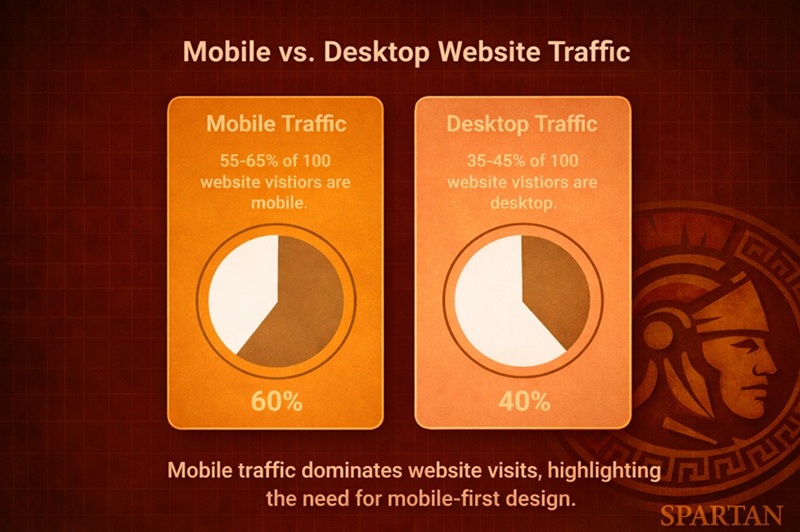
A page loads just a little too slowly. The mobile layout feels off. Navigation is not confusing, but it is not effortless either. The content is there, but it does not necessarily connect to what the user is looking for.
None of these issues stand out on their own. Together, they can form a steady leak of leads that abandon your website.
Visitors disengage. They scroll without knowing where to click. They leave without taking action.
When the experience feels disconnected, users do not try to fix it. They move on.
There Is No Clear Next Step
Even when a website does everything right up to this point, conversions can still stall.
The visitor is interested, and they understand the service. They are close to taking action, but they do not know where to go next.
The call to action is too generic. Contact options are buried and the process is not obvious, or it is too complicated. Instead of being guided, the user is left to decide what to do next.
That moment matters.
When the next step is not immediate and clear, the moment to convert is gone, and the opportunity is usually lost to a competitor who made the decision easier.
How Search Results Are Changing What “Good Performance” Looks Like
Even when marketing is executed well, the environment it operates in has changed.
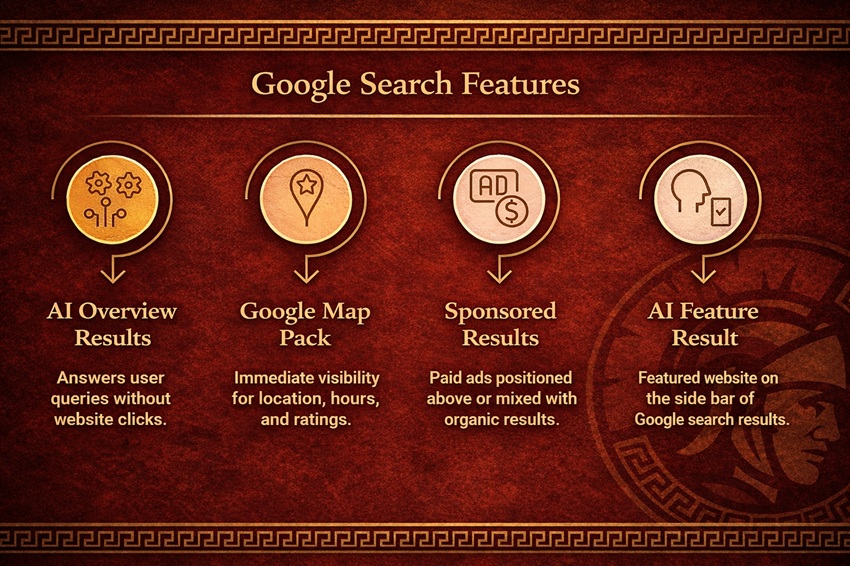
Search results are no longer a simple list of blue links. A single page can include AI-generated summaries, paid ads, local map packs, and featured results, all competing for attention before a user ever reaches traditional organic listings.
In many cases, the first organic result is not the first thing users see. Page one rankings still create a clear advantage, but they now exist within a more crowded and competitive space.
As a result, user behavior has shifted. Click-through rates are no longer concentrated in a single position, and traffic is distributed across multiple entry points. Users scan, compare, and engage with different elements on the page before deciding where to take action.
Because of this, a page can rank well and still receive fewer clicks than expected. That does not indicate a failure in strategy. It reflects a more layered search environment, where visibility is shared across multiple touchpoints rather than owned by a single position.
The Growing Importance of Google Business Profile Visibility
For local searches, the map pack is often one of the most prominent elements on the page, and in many cases it appears before traditional organic results.
That placement changes how users make decisions.
Instead of scanning multiple websites, users can immediately see which businesses are nearby, how they are rated, and whether the location is convenient for them. In a matter of seconds, they can rule options in or out based on proximity alone, without ever clicking through to a site.
From there, many users take action directly within the map pack. They call, request directions, or compare reviews without leaving the search results page.

Because of this, visibility in the map pack removes a layer of guesswork for the user. It answers key questions—where you are, how you’re perceived, and whether you are worth considering—before your website is even part of the decision.
That visibility is earned. It is influenced by how complete, active, and trusted your Google Business Profile is.
If your business is not competitive in this space, strong website rankings alone may not generate consistent leads. An optimized and actively managed Google Business Profile is not a secondary tactic. It is a primary driver of visibility and conversion in local search.
Why Authority Signals Like Backlinks Matter More Than Ever
As competition increases across search results, authority becomes a deciding factor.
Backlinks remain one of the strongest signals of credibility and trust. They tell search engines that your business is recognized by other relevant and reputable sources, which directly influences how your site is evaluated and where it appears in search results.
They impact:
- Your ability to rank for competitive searches
- How search engines assess your site’s credibility and relevance
- Your visibility across both organic results and other areas of the search ecosystem
Not all backlinks carry the same weight.
Links from credible, relevant sources strengthen your authority and support long-term performance. Low-quality or unrelated links can do the opposite, signaling a lack of trust and, in some cases, negatively impacting your site’s visibility.
As search results become more competitive and more layered, stronger authority helps secure and maintain the positions that still drive meaningful traffic.
Without it, even well-structured, well-written pages can struggle to compete in crowded search environments.
How to Tell if Your Marketing Is Actually Working
To evaluate performance accurately, focus on outcomes within the context of today’s search landscape.

Ask:
- Are leads increasing alongside visibility?
- Are those leads qualified and relevant to your services?
- Is your cost per lead improving over time?
- Can you connect new business back to specific marketing efforts?
If the answers are unclear, the issue may not be a single breakdown. It is often a combination of measurement gaps, conversion issues, and changes in how search results are structured.
Stop Measuring What Looks Good and Start Measuring What Matters
It is easy to rely on reports that show steady improvement. The numbers look clean. The trends move in the right direction.
That does not always translate into growth.
Real marketing performance is not defined by activity alone. It is defined by outcomes, supported by a strategy that reflects how search actually works today. That means focusing on what actually drives leads and revenue, understanding how visibility turns into action, and adjusting as the search landscape continues to evolve.
When those pieces align, marketing stops being a set of disconnected metrics and becomes a reliable driver of growth.
If your marketing looks strong but your business is not feeling the impact, the answer is not always to do more. It is to refine how performance is evaluated and make sure your strategy reflects the reality of modern search.
Is Your Marketing Actually Driving Growth?
Traffic and rankings are only part of the picture. Real performance comes from what actually converts.